

Not every house has a bedroom large enough to accommodate a large bed. However, there are still ways to make a large bed not only fit in a small space but actually look good there. Although there is no universal formula that works for every room, the following tips may help.
Determine the minimum path
To determine whether a large bed really fits in the room, experts advise ensuring there is at least 60 cm of space around the bed. This is the minimum level to travel comfortably.

To sleep comfortably with a large bed in a small room, you not only need minimum space but also need to pay attention to the type of bed. You should choose a bed without legs to create a spacious feeling and avoid injuries when moving in limited spaces.
Choose bed height
People often think low beds are the best choice for small bedrooms. However, expert Tami Ramsay of the interior design company Cloth & Kind in the US believes that it is much more important that the bed must be at a comfortable height for the user.
"It may not be a nice ratio compared to the room's ceiling height, but we prioritize the user's comfort level when choosing a bed," says Tami Ramsay. Her projects all choose beds from 60 cm to 70 cm high. In addition, it is important to note the symmetry of the bed height with the bed headboard.
Take advantage of the wall
One way to save space that designers recommend again and again is to choose wall-mounted bedside decorations. Instead of a standard bedside table (bedside table), choose a wall-mounted cabinet. Instead of a table lamp, install a wall lamp.
According to interior designer Matthew Kowles (New York), it is recommended to install custom shelves such as bookshelves next to the bed. "When you have a narrow space, a bed with bookshelves nearby creates the feeling of a cabin on a ship," he describes.
Avoid monochrome
Suzanne Tucker, co-founder of San Francisco-based interior design firm Tucker & Marks, says there should be at least a little contrast between the bed and the rest of the room. "Contrast can be a subtle combination of tones or between patterns," she says.
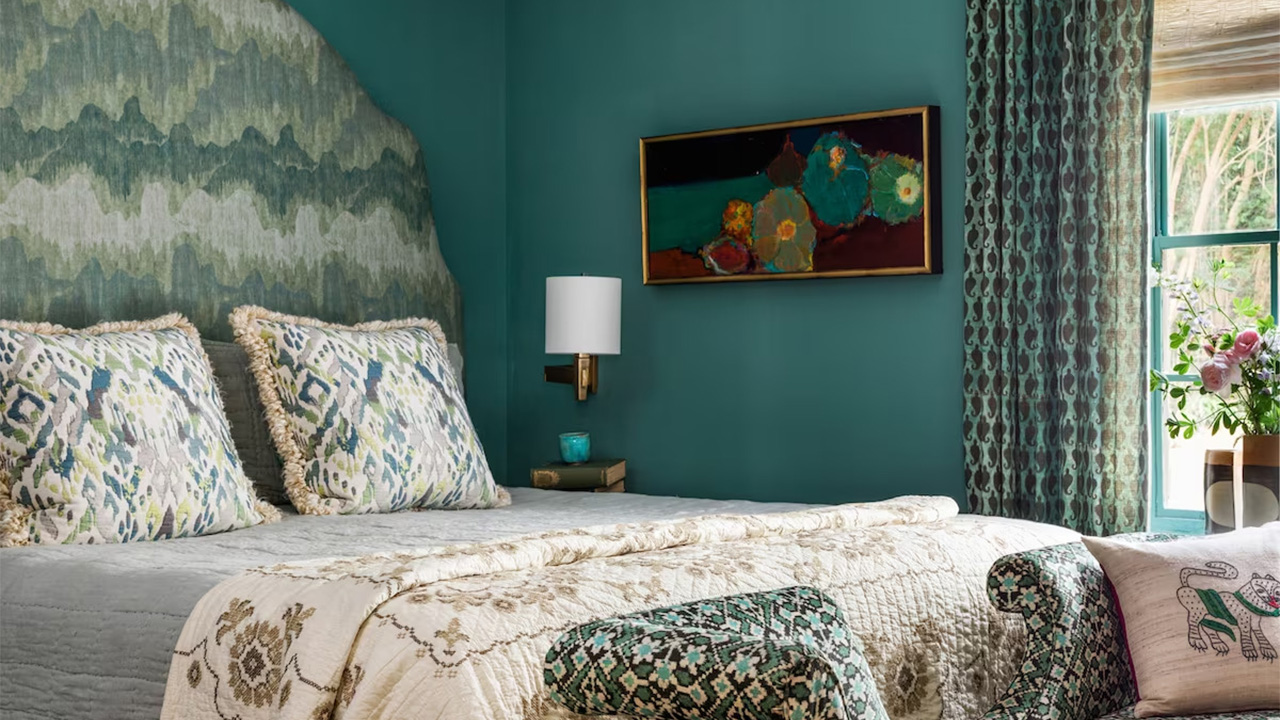
Don't be afraid to use patterns in a small room with a large bed. In a recent project, Tami Ramsay of Cloth & Kind used bold patterns on the headboard, curtains, side chairs, and pillowcases. Although it may seem counterintuitive to use multiple patterns in a small space, the combination of four different patterns will attract attention, rather than focusing on the relatively large size. of the bed, according to the designer.
Choose lighting
Not all wall sconces create the same effect in a tight space. Wrong installation in a fixed place can become a painful problem. According to Ramsay, it is ideal in cramped areas to use mobile lighting that can easily be moved out of the way instead of installing multiple fixed lights. In addition, you should choose a lamp that can adjust the lighting intensity.
Use a mirror
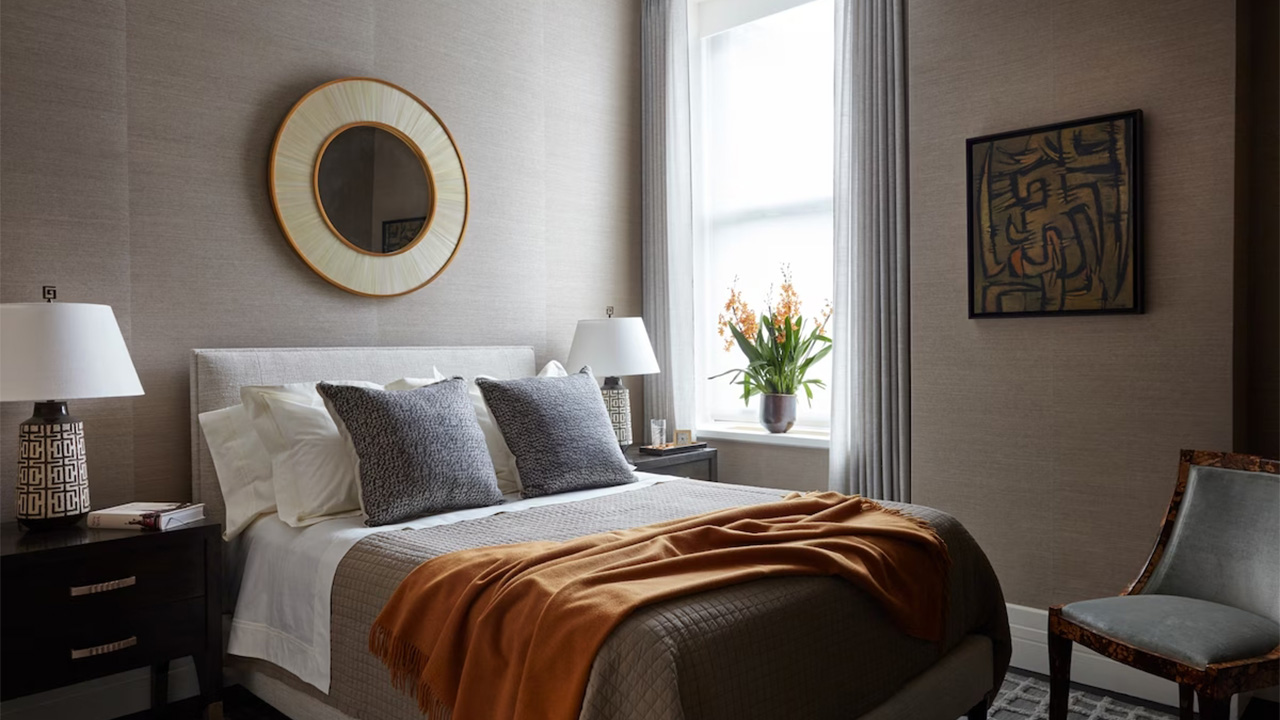
Mirrors are a classic way to make a room look larger. When you put a large bed in a narrow space, experts suggest installing small mirrors in other locations, in addition to the mirror usually on the dressing table. For example, Kowles hangs a pair of mirrors on the nightstand to create a different point of view when observing.
Don't skimp on bedding
Cindy Rinfret, founder of Rinfret design company in Connecticut (USA), said that when you enter a small room, bedding is the most dominant thing in that space. So make sure you love your bedding.
Curtains and four-poster beds are fine
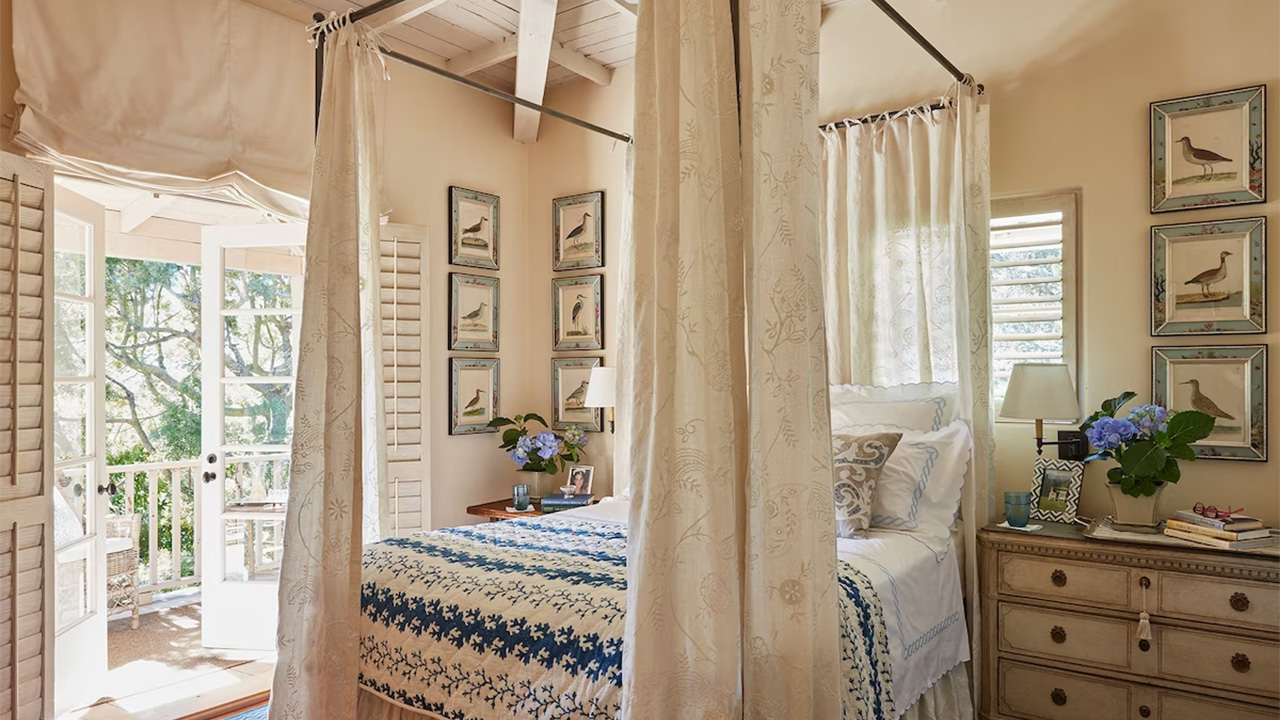
You might think that a four-poster bed or large decorative curtains would be too bulky in small rooms. But Tucker designs it often and says that "the feeling of a room within a room is very effective in small spaces" because it creates coziness.
If you want to add curtains around your bed, her advice is to make sure they're long enough to hug the floor.
Anh Ky (according to Washington Post)


