

In recent years, the Vietnamese market has tended to be interested in E1 industrial wood panels with the purpose of minimizing formaldehyde emissions into the air, to protect health and the environment.
What is the Formaldehyde emission concentration?
Formol is a common chemical and is widely prepared but is not approved. Formaldehyde is a colorless gas belonging to the aldehyde group, also known as Formol, Formaldehyde, Methyl Aldehyde, ...
Under normal conditions this gas has a strong pungent odor.
Formal's applications are used as a laboratory preservative, glue, anti-wrinkle fabric, pesticide, antiseptic, industrial flooring, industrial wood glue...
How is formaldehyde harmful to users' health?
At concentrations above 0.1 mg/kg of air, inhalation of Formaldehyde can cause eye and mucous membrane irritation, tearing, headache, burning sensation in the throat and difficulty breathing. Greater exposure to Formaldehyde, for example from drinking Formaldehyde solutions, is deadly.
Formaldehyde is a toxic substance listed by the World Health Organization as a possible carcinogen. Formaldehyde is a volatile gas. Therefore, when applied to many areas of life, this gas will be emitted into the environment, directly affecting the user.
The World Health Organization recommends against frequent exposure to high concentrations. Because this is a toxic substance that the body is unable to eliminate, long-term accumulation can seriously threaten human health. Some harmful effects of this gas on the human body can be listed as follows:
1/ When a normal person inhales Formaldehyde gas for a short period of time, it can cause eye and mucous membrane irritation. Symptoms appear: watery eyes, headache, burning sensation in the throat and difficulty breathing.
2/ Long-term exposure to this toxic gas can cause serious harm to the skin, respiratory system, leukemia, etc.
3/ For pregnant women, E can cause chromosomal errors and mutations that affect the development of the fetus.
4/ If E is introduced directly into the human body, it can cause severe poisoning or cancer. has been proven to cause cancer if formalin is introduced into the body.
5/ Stimulates the upper respiratory tract causing a runny nose.
6/ Laryngitis, respiratory tract inflammation, bronchial asthma, pneumonia.
7/ Causes dermatitis, allergic dermatitis, and urticaria.
8/ Slow digestion, digestive disorders, stomach ulcers, colitis...
9/ Contact or ingestion of substances with high levels of formaldehyde can cause death. (30ml is a potentially lethal dose).

Why do E emission standards in industrial wood need to be controlled?
It is because of the abuse of Formaldehyde in the industrial wood production industry that the Emission Standards (symbol E) were born. This is a set of standards agreed upon by the Council of European countries and is valid for circulation in many different countries. The goal of Emission Standard E is to measure and control the concentration of formalin in wood furniture products to ensure that these products do not affect the health of users.
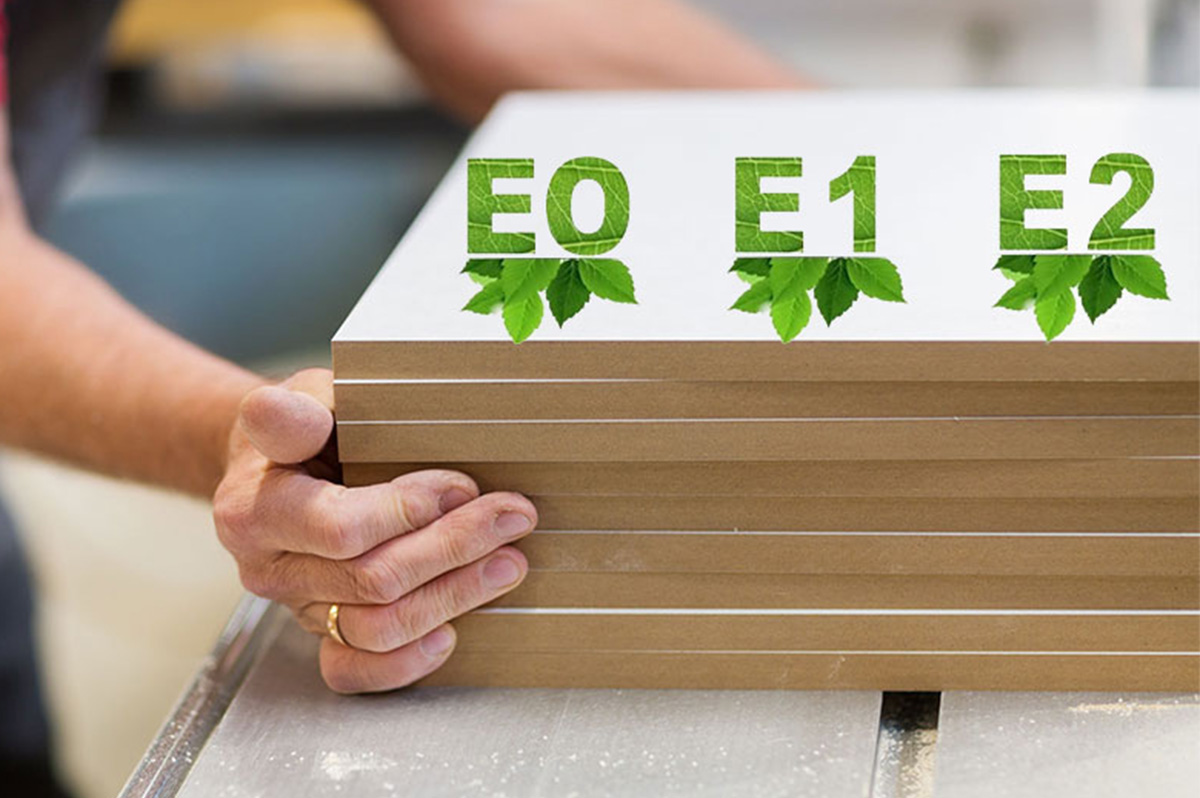
E is the standard for measuring Formol emission concentration in industrial wood.
Formaldehyde is a warning poison. Therefore, controlling with clear standards is a measure of responsibility to consumers and also a way to protect the rights of users.
Standard measure of E emissions in the industrial wood production and processing industry
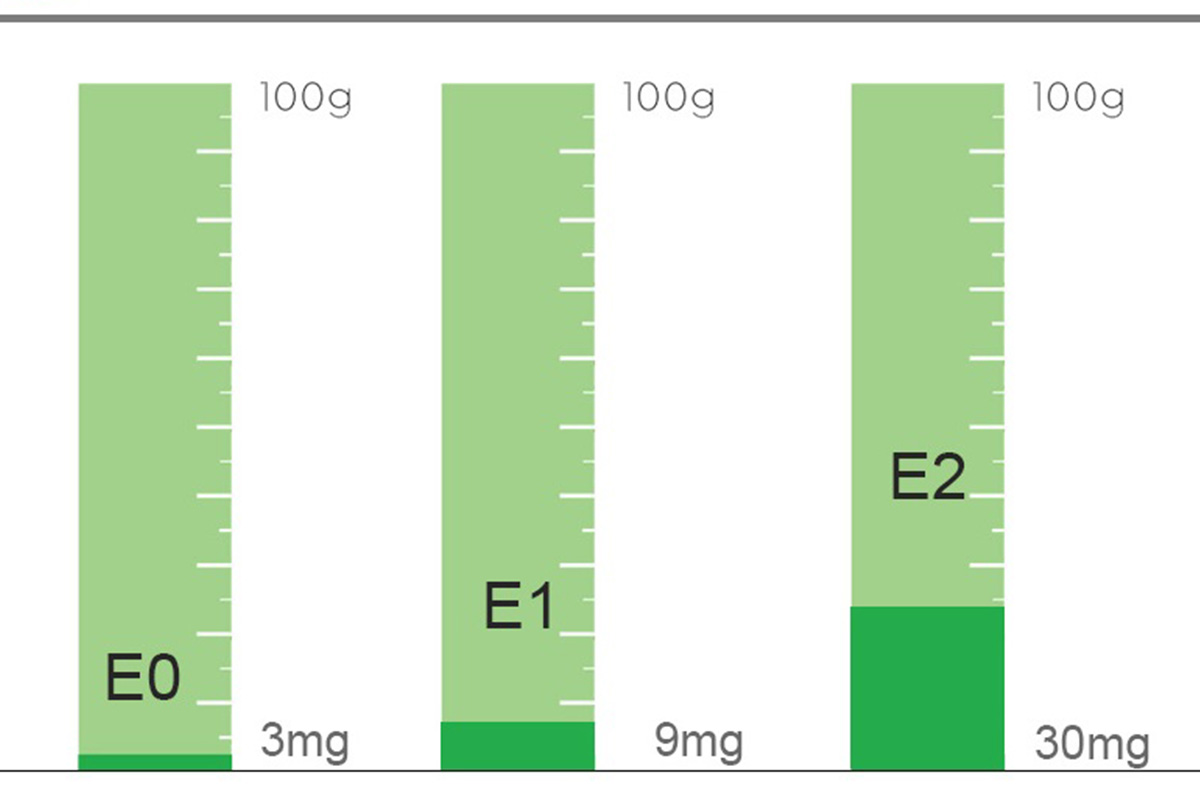
Industrial wood standards for E emissions are divided into many different levels to accurately represent the concentration of formalin in industrial wood as well as serve as a basis for buyers to choose products that are safe for health. . Standard E is divided into specific levels:
Super E0 standard
Stemming from the spirit of innovation, actively updating new trends in the world and paying attention to consumers' health, Moc Phat's products meet super E0 standards. has almost zero formaldehyde emission concentration.
Super E0 is the lowest formaldehyde emission level in the industrial wood industry, regulated by international standards such as EN 13986 (Europe), CARB P2 (California, USA) and F★★★★ (Japan ).
The maximum allowable formaldehyde emission concentration according to super E0 standards is 0.05 ppm (parts per million), equivalent to 0.0005 mg/m3.
Industrial wood meets super E0 standards and is safe for users' health, especially suitable for children and the elderly.
EPA standards:
EPA formaldehyde emission standards play an important role in protecting public health and promoting the sustainable development of the industrial wood industry. Manufacturers need to strictly comply with EPA regulations to ensure their products meet safety and quality standards.
Regulating the maximum allowable formaldehyde emission level for composite wood products: PB: 0.09 ppm, Plywood: 0.11pm, MDF: 0.11 ppm, thin MDF: 0.13 ppm.
Requires industrial wood manufacturers to comply with formaldehyde emission testing and monitoring methods as prescribed by the EPA.
Carb P2 standard
Carb P2 is phase 2 of the air toxics control measures issued by the California Air Resources Board (CARB). This standard is applicable to industrial wood products manufactured, sold or imported into California.
Formaldehyde concentration is at 0.5ppm.
The CARB-P2 standard was born as a standard that provides a commitment to ensuring safety for consumers when using industrial wood panel furniture.
E0 standard
E0 is the level most friendly to the user's health. Formaldehyde gas concentration is almost 0. Currently, very few industrial wood lines can meet this standard. Usually only applies to untreated natural wood.
Standard E1
E1 plywood are industrial wood products that achieve an emission concentration of 0.03ppm (parts per million - density measurement unit). At this threshold, Formol emissions at dilute concentrations do not directly affect the health of users. The E1 measure is widely used in industrial wood floors as a basis for choosing interior tiling materials that are safe for health.
E1 achieves emission concentrations that meet safety standards recognized by the World Health Organization.
E2 standard
The E2 index is the threshold that begins to be harmful to health. Emission content of Formol in the air >0.124mg/m3 is a warning sign that the product may be harmful to the user's health. This is a standard that is widely sold in Vietnam.
Which industrial wood furniture meets Formaldehyde standards and is safe for users?
It can be said that E emission is a concern that needs to be paid close attention when choosing industrial wood furniture. Surely no one wants us to have to come into contact with and live in an environment with potential health threats every day. Consumers can base on E1 standards applied to industrial wood products to evaluate and choose interior products that meet health safety standards.
Currently on the market there are many industrial wood furniture products offered for sale at low prices with many outstanding functions such as water resistance and termite resistance. In fact, in order to achieve these requirements at low production costs, most factories will use high levels of glue containing Formaldehyde to increase the hardness of the wood. So be very careful when evaluating cheap products.

Source: collected


